
Nutrition 8 min read
Pumpkin Juice Benefits for Eye Health and Immunity, Plus an Easy Recipe
Pumpkin juice benefits for your eyes and immune system, real USDA nutrition numbers, an easy raw pumpkin juice recipe, and whether you can drink it daily.

In this article
The Short Answer
Is pumpkin juice good for you? Yes. Pumpkin is one of the richest food sources of beta-carotene, which your body turns into vitamin A. One cup of raw pumpkin provides about 55% of the Daily Value for vitamin A for just 30 calories (USDA FoodData Central). It also contains lutein and zeaxanthin, two carotenoids that collect in the eye.
What pumpkin juice will not do: burn fat, detox your body, or prevent disease on its own. Below is what the nutrition data and research actually support, plus an easy recipe and answers to the most common questions.
Key Facts at a Glance
| Fact | Source |
|---|---|
| 1 cup of raw pumpkin (116 g) has 30 calories and 494 mcg vitamin A (RAE), about 55% of the Daily Value | USDA FoodData Central |
| The same cup has 3,596 mcg beta-carotene and 1,740 mcg lutein + zeaxanthin | USDA FoodData Central |
| Adults need 900 mcg (men) or 700 mcg (women) of vitamin A a day | NIH Office of Dietary Supplements |
| Vitamin A is needed for normal vision, immune function and reproduction | NIH Office of Dietary Supplements |
| Beta-carotene from food does not cause vitamin A toxicity | NIH Office of Dietary Supplements |
What Is Pumpkin Juice?
Like carrot juice, pumpkin juice is golden and slightly sweet. It is made from raw pumpkin flesh, either pressed in a juicer or blended with water. Blending keeps the fiber; straining or pressing removes most of it but gives a smoother drink.
Easy Raw Pumpkin Juice Recipe
Makes 2 small glasses
- 2 cups raw pumpkin, peeled and cubed (sugar or pie pumpkins taste best)
- 1 to 1½ cups cold water
- Optional: 1 small apple or orange for sweetness, a thin slice of fresh ginger, a pinch of cinnamon
- Peel the pumpkin with a vegetable peeler and scoop out the seeds.
- Cut the flesh into small cubes.
- Blend the cubes with the water (and any extras) until completely smooth.
- Drink as is for the fiber, or strain through a fine sieve or nut-milk bag for a lighter juice.
- Serve right away, or refrigerate and drink within 24 hours.
If you own a cold-press or centrifugal juicer, you can juice the cubes directly with no water. Not sure which machine to use? See our guide to cold-pressed vs. centrifugal juice.
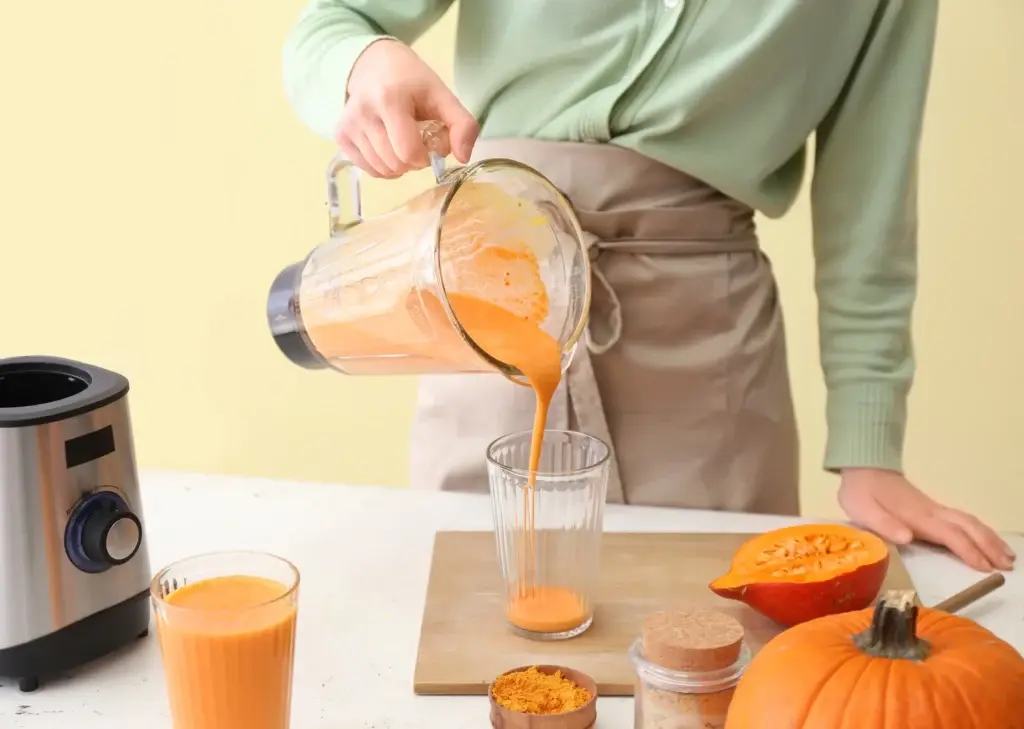
Good combinations: pumpkin and carrot, pumpkin and orange, pumpkin with apple and ginger, or pumpkin with beet.
Pumpkin Nutrition: What’s in One Cup
The figures below are for 1 cup of raw pumpkin cubes (116 g). A glass of blended pumpkin juice made from that amount carries roughly the same vitamins and minerals. Straining removes most of the fiber.
| Nutrient | Amount | % Daily Value |
|---|---|---|
| Calories | 30 | – |
| Protein | 1.2 g | – |
| Carbohydrate | 7.5 g | – |
| Fiber | 0.6 g | 2% |
| Vitamin A (RAE) | 494 mcg | 55% |
| Beta-carotene | 3,596 mcg | – |
| Lutein + zeaxanthin | 1,740 mcg | – |
| Vitamin C | 10.4 mg | 12% |
| Vitamin E | 1.2 mg | 8% |
| Riboflavin (B2) | 0.13 mg | 10% |
| Folate | 18.6 mcg | 5% |
| Potassium | 394 mg | 8% |
| Copper | 0.15 mg | 16% |
| Manganese | 0.15 mg | 6% |
Source: USDA FoodData Central, Pumpkin, raw. % Daily Value uses the FDA Daily Values for adults.
You may see older articles claim “171% of your daily vitamin A” for a cup of pumpkin. That figure came from an outdated labeling standard measured in IU. Under the current standard, the accurate figure is about 55%, which is still an excellent amount for 30 calories.
Benefits of Drinking Pumpkin Juice
1. Supports Healthy Vision
Vitamin A is essential for normal vision. It forms part of rhodopsin, the pigment that lets your eyes adjust to low light, and a deficiency causes night blindness (NIH ODS). Pumpkin is one of the most concentrated food sources of beta-carotene, the plant form your body converts to vitamin A as needed.
Pumpkin also contains lutein and zeaxanthin. These carotenoids build up in the macula, the part of the retina responsible for sharp central vision. Based on the large AREDS2 trial, eye doctors now recommend a supplement formula containing lutein and zeaxanthin for people with intermediate or advanced age-related macular degeneration (AREDS2 Research Group, 2013). Juice is not a substitute for that treatment, but it is an easy way to get these carotenoids from food.
2. Supports Normal Immune Function
Vitamin A helps maintain the linings of your eyes, lungs and gut, which act as barriers to infection, and it is needed for normal immune cell function (NIH ODS). Pumpkin also supplies vitamin C and vitamin E. Getting enough of these nutrients supports a normally functioning immune system. Extra beyond your needs does not “boost” immunity further.
3. Rich in Antioxidant Carotenoids
Beta-carotene, lutein and zeaxanthin are antioxidants that give pumpkin its orange color. Diets rich in carotenoid-containing fruits and vegetables are linked with better health in observational studies, but those studies cannot prove that any single food prevents disease. Treat pumpkin juice as one colorful part of a varied diet, not a cure.
4. Supports Healthy Skin
Vitamin A is involved in making and repairing skin cells (NIH ODS). There is no evidence that pumpkin juice treats skin conditions, but meeting your vitamin A needs is part of keeping skin healthy.
5. Low in Calories
At about 30 calories per cup of pumpkin, pumpkin juice is a light alternative to sugary drinks. That makes it easy to fit into most eating plans. It does not burn fat or cause weight loss on its own. Blending instead of straining keeps the fiber, which makes it a little more filling.
Pumpkin Juice Benefits for Men and Women
The benefits are the same for everyone, but vitamin A needs differ. The recommended intake is 900 mcg a day for adult men and 700 mcg for adult women, rising to 770 mcg during pregnancy and 1,300 mcg while breastfeeding (NIH ODS). One cup of pumpkin covers more than half of a man’s daily need and about 70% of a woman’s.
Pregnancy note: too much preformed vitamin A from supplements or liver can harm a developing baby. Beta-carotene from pumpkin and other plants does not carry that risk, because the body converts it only as needed. If you are pregnant, check any supplements with your doctor.
Can You Drink Pumpkin Juice Every Day?
For most healthy adults, a glass a day is fine. A few things to keep in mind:
- Orange-tinted skin: drinking very large amounts of beta-carotene-rich juice over weeks can turn your palms and soles slightly orange. This is called carotenodermia. It is harmless and fades when you cut back (NIH ODS).
- Potassium: people with kidney disease who need to limit potassium should check with their doctor first.
- Store-bought versions: many bottled “pumpkin juice” drinks are mostly apple juice and added sugar. Read the label or make your own.
Raw, Green and White Pumpkin Juice
Raw pumpkin juice is what the recipe above makes. It keeps the most vitamin C, which drops with cooking.
Green pumpkin can mean an unripe pumpkin or a green-skinned variety such as kabocha. Beta-carotene is what makes the flesh orange, so check the inside: the deeper the orange, the more beta-carotene.
White pumpkin juice is popular in South Asia, but it is usually made from ash gourd (winter melon), a different plant from orange pumpkin. Its nutrition is different and much lower in vitamin A, so the numbers in this article do not apply to it.
Try Pumpkin at Pure Green This Fall
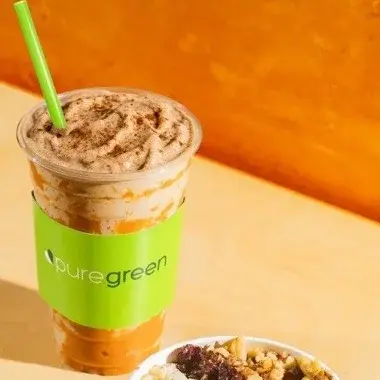
Not in the mood to peel a pumpkin? The Pumpkin Spice Smoothie and Pumpkin Spice Oatmeal are back on the menu for fall at participating Pure Green stores. The smoothie blends real pumpkin puree with banana, cashew butter and almond milk. See what’s new for fall or find a Pure Green near you.
Frequently Asked Questions
Is pumpkin juice good for you?
Yes. It is low in calories and rich in beta-carotene (vitamin A), plus vitamin C, potassium and the eye-friendly carotenoids lutein and zeaxanthin.
What is pumpkin juice good for?
Its best-supported role is helping you meet your vitamin A needs, which matter for vision, immune function and skin.
Can I drink pumpkin juice daily?
Most healthy adults can enjoy a glass a day. Very large amounts over time can harmlessly tint your skin orange. People with kidney disease should ask a doctor because of the potassium.
Is pumpkin juice good for weight loss?
It is low in calories and can replace sugary drinks, but it does not cause weight loss by itself. Keep the fiber by blending rather than straining.
Is raw pumpkin juice safe?
Yes. Raw pumpkin flesh is safe to eat and juice. Wash the outside before cutting, remove the skin and seeds, and refrigerate leftovers for no more than 24 hours.
Is pumpkin juice the same as pumpkin spice?
No. Pumpkin juice is made from the pumpkin itself. Pumpkin spice is a blend of cinnamon, nutmeg, ginger and cloves, often paired with pumpkin puree in drinks like our seasonal smoothie.
Sources
- U.S. Department of Agriculture, Agricultural Research Service. Pumpkin, raw (FDC ID 168448). FoodData Central. https://fdc.nal.usda.gov/food-details/168448/nutrients
- National Institutes of Health, Office of Dietary Supplements. Vitamin A and Carotenoids: Fact Sheet for Health Professionals. https://ods.od.nih.gov/factsheets/VitaminA-HealthProfessional/
- U.S. Food and Drug Administration. Daily Value on the Nutrition and Supplement Facts Labels. https://www.fda.gov/food/nutrition-facts-label/daily-value-nutrition-and-supplement-facts-labels
- Age-Related Eye Disease Study 2 Research Group. Lutein + zeaxanthin and omega-3 fatty acids for age-related macular degeneration: the AREDS2 randomized clinical trial. JAMA. 2013;309(19):2005–2015. https://pubmed.ncbi.nlm.nih.gov/23644932/
This article is for general information and is not medical advice. Talk with a qualified healthcare professional about your individual needs.


