
Nutrition 11 min read
Green Juice Benefits: What It Does for Your Body (and What It Doesn't)
What green juice does for your body, backed by research: nutrients, blood pressure, skin and energy, the best time to drink it, risks and an easy recipe.

In this article
- The Short Answer
- What Is Green Juice?
- What Does Green Juice Do for Your Body?
- What Green Juice Doesn’t Do
- What Each Green Juice Ingredient Adds
- Green Juice Benefits for Women and Men
- Can Green Juice Help With Skin or Weight Loss?
- When Is the Best Time to Drink Green Juice?
- Easy Green Juice Recipe
- Try Pure Green’s Cold-Pressed Green Juices
- Frequently Asked Questions
The Short Answer
Is green juice good for you? Yes, as an easy way to get more leafy greens. A juice made mostly from kale, spinach, celery and cucumber delivers vitamin K, folate, vitamin C, potassium and plant compounds such as nitrate and lutein, for few calories. Most adults fall short on vegetables: only about 1 in 10 U.S. adults eats the recommended amount (CDC, 2022).
What green juice will not do: detox your body, change your blood’s pH or replace whole vegetables. Juicing removes most of the fiber (Mayo Clinic). Below is what the research supports, what each ingredient adds, the best time to drink it and who should be careful.
Key Facts at a Glance
| Fact | Source |
|---|---|
| About 10% of U.S. adults meet vegetable recommendations | CDC MMWR, 2022 |
| Juicing removes most fiber; juice is not healthier than whole vegetables | Mayo Clinic |
| Dietary nitrate (found in leafy greens) lowered systolic blood pressure by about 4.4 mm Hg on average in trials | Siervo et al., J Nutr, 2013 |
| About one serving of leafy greens a day was linked to slower cognitive decline in older adults | Morris et al., Neurology, 2018 |
| No compelling evidence supports detox diets for removing toxins | Klein & Kiat, J Hum Nutr Diet, 2015 |
What Is Green Juice?
Green juice is juice made mainly from green vegetables, usually kale, spinach, celery, cucumber and romaine, often with herbs such as parsley and a little fruit, lemon or ginger for flavor. It can be pressed in a cold press, made in a home juicer or blended and strained.
Green juice is different from a green smoothie. A smoothie blends the whole vegetable, so it keeps the fiber. A juice separates the liquid from the pulp, so it is lighter and easier to drink but much lower in fiber.
What Does Green Juice Do for Your Body?
1. Helps you reach your vegetable target
This is the most reliable benefit. A 12- to 16-ounce green juice is made from several cups of raw vegetables, which is more greens than many people eat in a day. A cup of 100% vegetable juice counts toward your daily vegetable goal (USDA MyPlate), though whole vegetables should still make up most of your intake.
2. Supplies key vitamins and minerals
Leafy greens are among the best food sources of vitamin K, which your body needs for normal blood clotting and bone health (NIH ODS), and folate, a B vitamin needed to make DNA and red blood cells (NIH ODS). Green juice also provides vitamin C from greens and lemon, and potassium from celery, cucumber and leafy greens.
3. May support healthy blood pressure
Spinach, lettuce, celery and other leafy greens are naturally rich in nitrate, which your body converts to nitric oxide, a compound that helps blood vessels relax. In a meta-analysis of 16 short-term trials, nitrate supplements and nitrate-rich beetroot juice lowered systolic blood pressure by about 4.4 mm Hg on average (Siervo et al., 2013). Those trials used concentrated doses, so a daily green juice is best seen as one part of a vegetable-rich diet, not a treatment.
4. Linked to healthy brain aging
In a study that followed 960 older adults for about five years, people who ate about one serving of leafy greens a day had slower cognitive decline than those who rarely ate them (Morris et al., 2018). The study was observational and looked at greens in the diet, not juice specifically, but it points to the same nutrients green juice contains: vitamin K, lutein, folate and nitrate.
5. Supports normal immune function
Vitamin C and folate are both needed for a normally working immune system (NIH ODS). Getting enough of them supports your defenses, but extra beyond your needs does not “boost” immunity further.
6. Hydration, with some electrolytes
Celery and cucumber are mostly water, and green juice contains potassium and a small amount of sodium, the main electrolytes your body uses to balance fluids. It counts toward your daily fluid intake, though it is not a replacement for water during long exercise.
7. A lighter alternative to sugary drinks
A vegetable-forward green juice is low in calories and sugar compared with soda or most bottled fruit juices. Fruit-heavy green juices are a different story, because apple, pineapple and other fruit add sugar quickly. Check the ingredient order: greens should come first.

What Green Juice Doesn’t Do
Does green juice detox your body?
No. Your liver and kidneys remove waste and toxins continuously, and there is no compelling evidence that juices or detox diets improve that process (Klein & Kiat, 2015). A “green detox juice” is a nutritious drink, not a cleanse for your organs.
Does green juice alkalize your body?
No. Your body keeps blood pH within a narrow range on its own, no matter what you eat or drink. Food can change the acidity of your urine, but not your blood.
Does green juice help digestion?
Not because of fiber: juicing removes most of it (Mayo Clinic). If digestion and regularity are your goal, a green smoothie, which keeps the fiber, or more whole vegetables will do more.
Is green juice anti-inflammatory?
Leafy greens contain antioxidants and other plant compounds, and diets rich in vegetables are linked to lower inflammation in observational research. That does not mean a single juice reduces inflammation, but it fits an anti-inflammatory eating pattern.
What Each Green Juice Ingredient Adds
| Ingredient | What it contributes |
|---|---|
| Kale | Vitamin K, vitamin C, lutein and other carotenoids |
| Spinach | Folate, vitamin K, nitrate and lutein (also high in oxalate, see below) |
| Celery | Water, potassium, nitrate and a mild salty flavor |
| Cucumber | Mostly water, for a light, hydrating base |
| Romaine | Folate and vitamin K, with a mild taste |
| Parsley | Vitamin K and vitamin C, plus a fresh, peppery flavor |
| Green apple | Sweetness, which also adds natural sugar |
| Lemon | Vitamin C and brightness that balances bitter greens |
| Ginger | Spicy flavor; ginger has been studied for nausea relief (NCCIH) |
Green Juice Benefits for Women and Men
The benefits are largely the same for everyone. Two details are worth knowing:
- Women who could become pregnant need folate. Leafy greens provide natural folate, and health authorities also advise 400 mcg of folic acid a day from supplements or fortified foods (NIH ODS).
- Iron: spinach and other greens contain plant iron, which the body absorbs less easily than iron from meat. The vitamin C in lemon helps your body absorb more of it (NIH ODS).
For men, the blood pressure and heart-health connection from leafy greens is the most relevant, along with simply eating more vegetables.
Can Green Juice Help With Skin or Weight Loss?
Skin: vitamin C is needed to make collagen, and eating more fruits and vegetables has been linked to healthier-looking skin tone in a small study (Whitehead et al., 2012). Green juice can be part of that, but it is not a skin treatment.
Weight loss: a low-sugar green juice can replace higher-calorie drinks and snacks. But liquids are less filling than whole foods (Flood-Obbagy & Rolls, 2009), so green juice works best alongside meals with protein and fiber, not as a meal replacement.
When Is the Best Time to Drink Green Juice?
There is no evidence that green juice works better at a particular time of day. Drink it whenever it helps you most:
- In the morning: many people like it as part of breakfast or in place of a sugary drink. Benefits come from drinking it regularly, not from the hour.
- On an empty stomach: this is fine for most people, but there is no proven absorption advantage. If greens upset your stomach, have the juice with food.
- With a meal: pairing juice with protein and fiber keeps you fuller longer. The vitamin C may also help you absorb iron from plant foods in the same meal.
Can you drink green juice every day?
Yes, most healthy adults can drink one green juice a day. About 8 to 16 ounces is a sensible daily amount, and rotating your greens, such as kale, romaine and cucumber instead of spinach every day, keeps oxalate in check.
Who should be careful with green juice?
- People taking warfarin (Coumadin) should keep their vitamin K intake consistent from day to day, since sudden changes affect how the drug works (NIH ODS). Talk with your doctor before adding a daily green juice.
- People with kidney disease or a history of kidney stones: spinach-heavy juices are high in oxalate, and drinking large amounts has caused kidney injury in rare cases (Makkapati et al., 2018). Potassium can also be a concern with kidney disease.
- Pregnant women, young children, older adults and people with weakened immune systems should choose pasteurized or otherwise treated juice, because untreated juice can carry harmful bacteria (FDA).
Easy Green Juice Recipe
Makes about 16 ounces
- 2 cups kale or romaine, loosely packed
- 1 cup spinach
- 3 celery stalks
- ½ large cucumber
- A small handful of parsley
- ½ green apple (optional, for sweetness)
- Juice of ½ lemon
- 1-inch piece of fresh ginger
- Wash all produce well and pat dry.
- Cut everything into pieces that fit your juicer.
- Juice the greens and cucumber first, then the apple, lemon and ginger.
- No juicer? Blend with ½ cup cold water until smooth, then strain through a nut-milk bag or fine sieve. Skip straining to keep the fiber.
- Drink right away, or refrigerate in a sealed jar and drink within 24 hours.
For the most nutrients per sip, keep the ratio at about 80% vegetables to 20% fruit.
Try Pure Green’s Cold-Pressed Green Juices
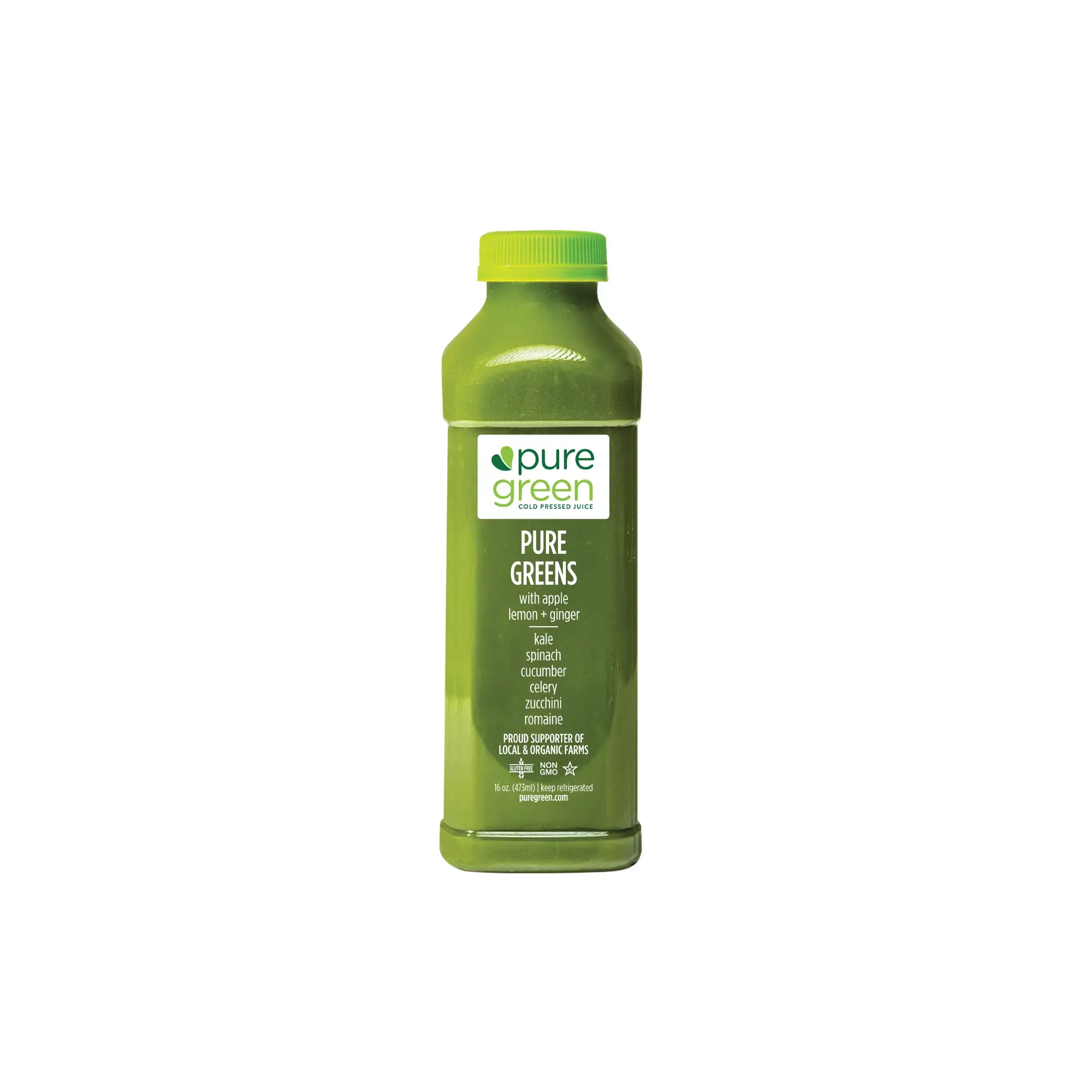
Every Pure Green green juice starts with the same six vegetables: kale, spinach, cucumber, celery, zucchini and romaine.
- Pure Greens Lemon & Ginger: the six-vegetable base with lemon and ginger and no fruit, for the most greens per bottle.
- Pure Greens Apple, Lemon & Ginger: the same base with apple, lemon and ginger for a little sweetness.
- Pure Greens Apple: the base with apple, for a milder, sweeter green juice.
See the full cold-pressed juice menu or find a Pure Green near you.
Frequently Asked Questions
What is green juice good for?
Its most reliable benefit is helping you eat more leafy greens, which supply vitamin K, folate, vitamin C, potassium and nitrate. Diets rich in these vegetables are linked to healthy blood pressure and healthy brain aging.
Is green juice better than eating vegetables?
No. Whole vegetables keep their fiber and are more filling. Green juice is a convenient way to add more greens, not a replacement for them.
Is cold-pressed green juice healthier?
Cold-pressed and homemade juices from the same produce contain similar nutrients. Cold pressing yields a smooth juice and is common in juice bars. Choose based on taste, convenience and ingredient list.
Does green juice have electrolytes?
Yes. It contains potassium and a small amount of sodium, mainly from celery, cucumber and leafy greens.
How much green juice should I drink a day?
For most healthy adults, one glass of about 8 to 16 ounces a day is plenty. Keep most of your vegetables whole.
What are the benefits of a green juice shot?
A green shot, often wheatgrass or a concentrated green blend, is a 1- to 2-ounce serving. It contains the same kinds of nutrients as green juice, just less of them, so it is a quick add-on rather than a stronger version of a full glass.
Does green juice break a fast?
Yes. Green juice contains calories and natural sugars, so it breaks a fast. If you follow time-restricted eating, drink it during your eating window.
Sources
- Lee SH, et al. Adults Meeting Fruit and Vegetable Intake Recommendations, United States, 2019. MMWR. 2022;71(1):1–9. https://www.cdc.gov/mmwr/volumes/71/wr/mm7101a1.htm
- Mayo Clinic. Juicing: What are the health benefits? https://www.mayoclinic.org/healthy-lifestyle/nutrition-and-healthy-eating/expert-answers/juicing/faq-20058020
- Siervo M, Lara J, Ogbonmwan I, Mathers JC. Inorganic nitrate and beetroot juice supplementation reduces blood pressure in adults: a systematic review and meta-analysis. J Nutr. 2013;143(6):818–826. https://pubmed.ncbi.nlm.nih.gov/23596162/
- Morris MC, et al. Nutrients and bioactives in green leafy vegetables and cognitive decline: prospective study. Neurology. 2018;90(3):e214–e222. https://pubmed.ncbi.nlm.nih.gov/29263222/
- Klein AV, Kiat H. Detox diets for toxin elimination and weight management: a critical review of the evidence. J Hum Nutr Diet. 2015;28(6):675–686. https://pubmed.ncbi.nlm.nih.gov/25522674/
- Makkapati S, D’Agati VD, Balsam L. “Green smoothie cleanse” causing acute oxalate nephropathy. Am J Kidney Dis. 2018;71(2):281–286. https://pubmed.ncbi.nlm.nih.gov/29203127/
- National Institutes of Health, Office of Dietary Supplements. Vitamin K, Folate, Vitamin C and Iron Fact Sheets for Health Professionals. https://ods.od.nih.gov/factsheets/
- U.S. Food and Drug Administration. What You Need to Know About Juice Safety. https://www.fda.gov/food/buy-store-serve-safe-food/what-you-need-know-about-juice-safety
- U.S. Department of Agriculture. MyPlate: Vegetables. https://www.myplate.gov/eat-healthy/vegetables
- Whitehead RD, et al. You are what you eat: within-subject increases in fruit and vegetable consumption confer beneficial skin-color changes. PLoS One. 2012;7(3):e32988. https://journals.plos.org/plosone/article?id=10.1371/journal.pone.0032988
- Flood-Obbagy JE, Rolls BJ. The effect of fruit in different forms on energy intake and satiety at a meal. Appetite. 2009;52(2):416–422. https://pubmed.ncbi.nlm.nih.gov/19110020/
This article is for general information and is not medical advice. Talk with a qualified healthcare professional about your individual needs.


